Macon is right in the center of Georgia, and there is a whole lot of information online about it that is either outdated, flat-out wrong, or missing the bigger picture. This is the honest breakdown of what it is really like to live here, from housing prices and job opportunities to schools, safety, weather, and the local culture.
Some parts of Macon are incredibly affordable and full of opportunity. Other parts demand serious homework before you buy. The key is not treating Macon like one giant, uniform city. Get specific about the neighborhood, school zone, commute, and lifestyle you need before making the move.
Key Takeaways
Macon offers substantially lower home prices than Atlanta, but local pay can be lower.
Neighborhood selection matters because safety, schools, and amenities vary block by block.
A car is essential for most Macon residents due to limited public transit frequency.
Downtown investment, major employers, and redevelopment are fueling Macon’s current momentum.
Table of Contents
1. Your Money Can Go a Lot Farther in Macon
Housing is one of the biggest reasons people look at moving to Macon. A local market snapshot places the average Macon home around $156,000, compared with roughly $380,000 in Atlanta. The video description also cites a median home price near $195,000, which is still dramatically below many larger Georgia markets. Different sources measure averages and medians differently, but the overall message is clear: there is a substantial price gap.
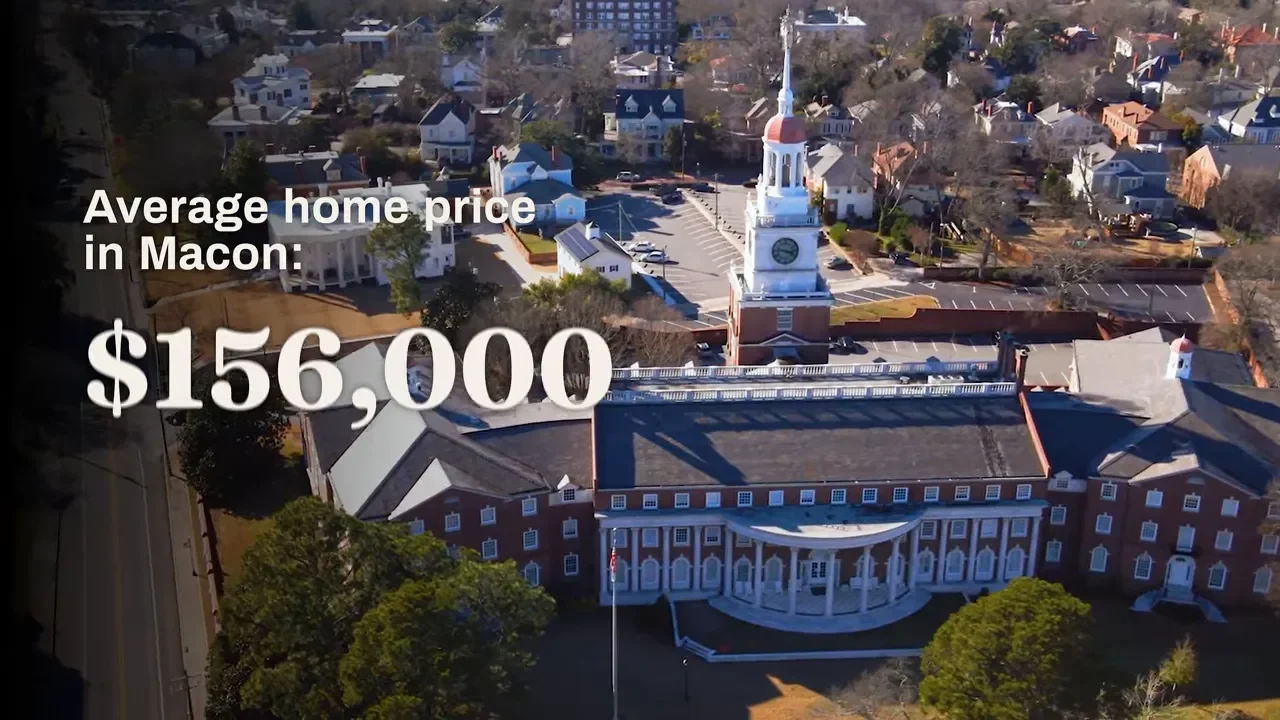
Macon home prices can create a much different buying equation than Atlanta.
That affordability can completely change what a move looks like. One family relocating from Atlanta was selling an 800 square foot condo with a terrace and using that equity to get close to a brand-new three-bedroom home in Middle Georgia, complete with a lawn, for about the same price.
That is a big upgrade in space. But do not make the rookie mistake of looking only at the home price. A lower mortgage does not automatically mean a better financial situation if your income takes a major hit after moving.
Keep Your Income in the Equation
Before relocating, compare your likely local compensation with your current income, not just with the cost of the house. The goal is simple: keep your earnings high enough that the lower housing costs actually improve your quality of life.
For many people, that means finding a job first, keeping a remote position, or living in Macon while commuting to a stronger-paying employer nearby. There are major employers throughout Middle Georgia, including Robins Air Force Base, healthcare systems, distribution operations, manufacturing companies, and growing technology-related facilities.
For a starting point on local opportunities, use the Middle Georgia job search guide.
2. Paychecks in Macon Can Be Lower
Here is the honest caveat: Macon wages are often lower than people expect. The average household income discussed for Macon is about $47,700. Just south in the Warner Robins and Houston County area, the figures referenced range from about $65,700 to $86,600, depending on the data source and location.
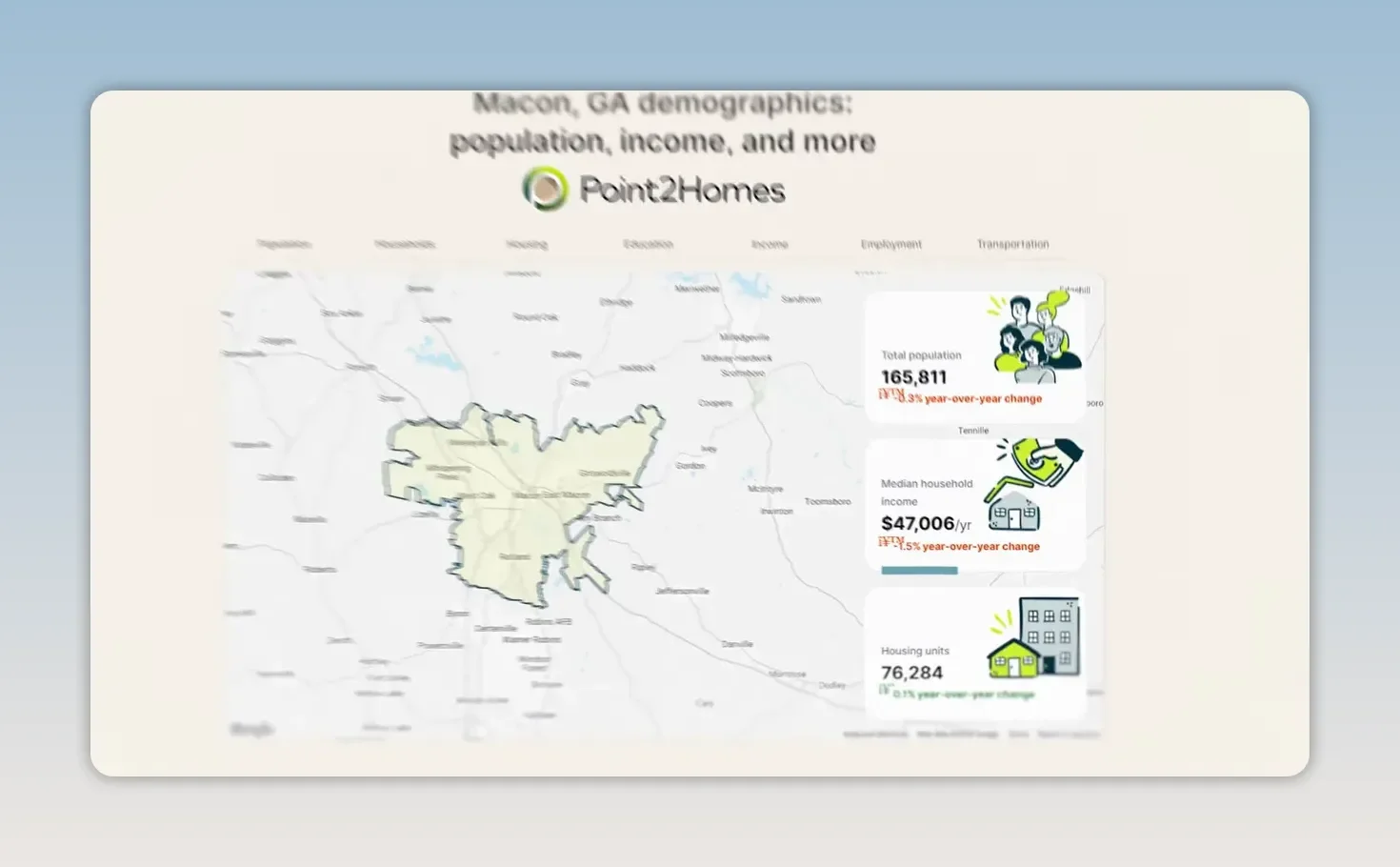
That does not mean there are no good-paying jobs in Macon. There absolutely are. Piedmont is a major healthcare employer with expansion underway, and the region has opportunities in healthcare, education, aerospace, defense, manufacturing, logistics, and distribution.
A smart Middle Georgia strategy can be to live where the home works for your budget and commute 20 to 25 minutes to where the pay is better. Macon’s central location makes that much more realistic than it would be in a sprawling metro area.
3. Macon Is Not Simply the Most Dangerous City in Georgia
The phrase “Macon is the most dangerous city in Georgia” gets repeated constantly online. A lot of that came from old advertising built around 2018 crime data that continued circulating for years. Once those articles gained traction, search engines and AI-driven results kept resurfacing them.
Crime is not something to brush aside, but the narrative needs context. The homicide total cited for 2022 was 70, while the more recent figure discussed was 29. That is meaningful progress, even though anyone moving here should still take safety seriously and research a specific location before signing anything.
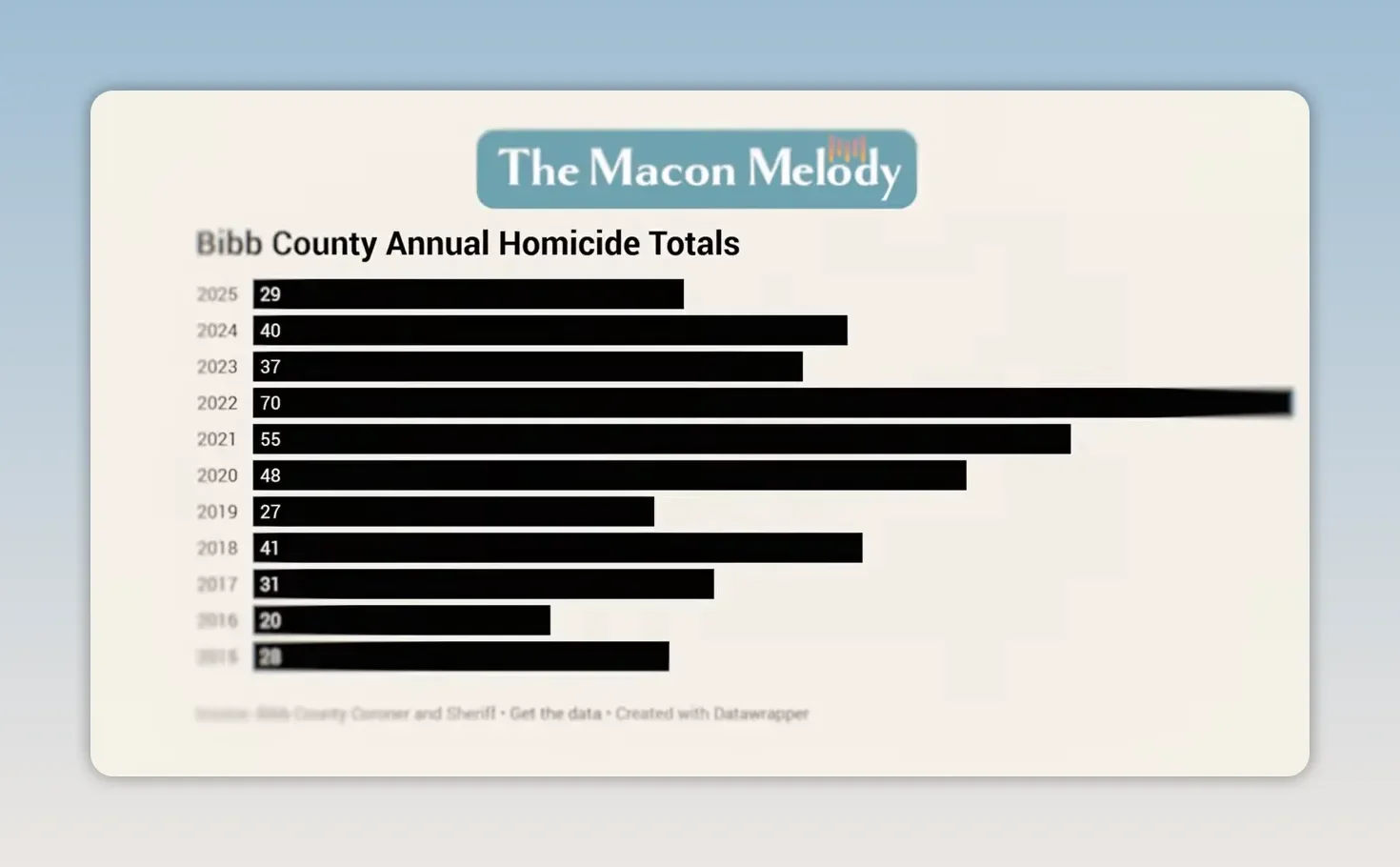
Crime trends matter, but neighborhood-level research matters even more when choosing a home.
Every city has better and worse pockets. Macon is no exception. Do not start by opening a home search, falling in love with granite countertops, and then checking the area afterward. Do it the other way around.
Use a neighborhood research resource such as Niche to review crime information and local ratings.
Identify the parts of town that fit your comfort level, commute, and lifestyle.
Search for homes within those specific areas.
Visit at different times of day before making a final decision.
4. Macon Is a Block-by-Block City
Macon-Bibb County covers a large area with roughly 157,000 people. That means “Macon” on a listing does not tell you enough. The experience can change dramatically from one pocket to the next.
Start your search with a subsection, not the whole city. Depending on what you want, that may mean:
Vineville or Ingleside for established areas with character.
Zebulon Road or North Macon near Bass Road for access to shopping and the outdoor mall area.
South Bibb County or South Macon for a practical route toward Robins Air Force Base.
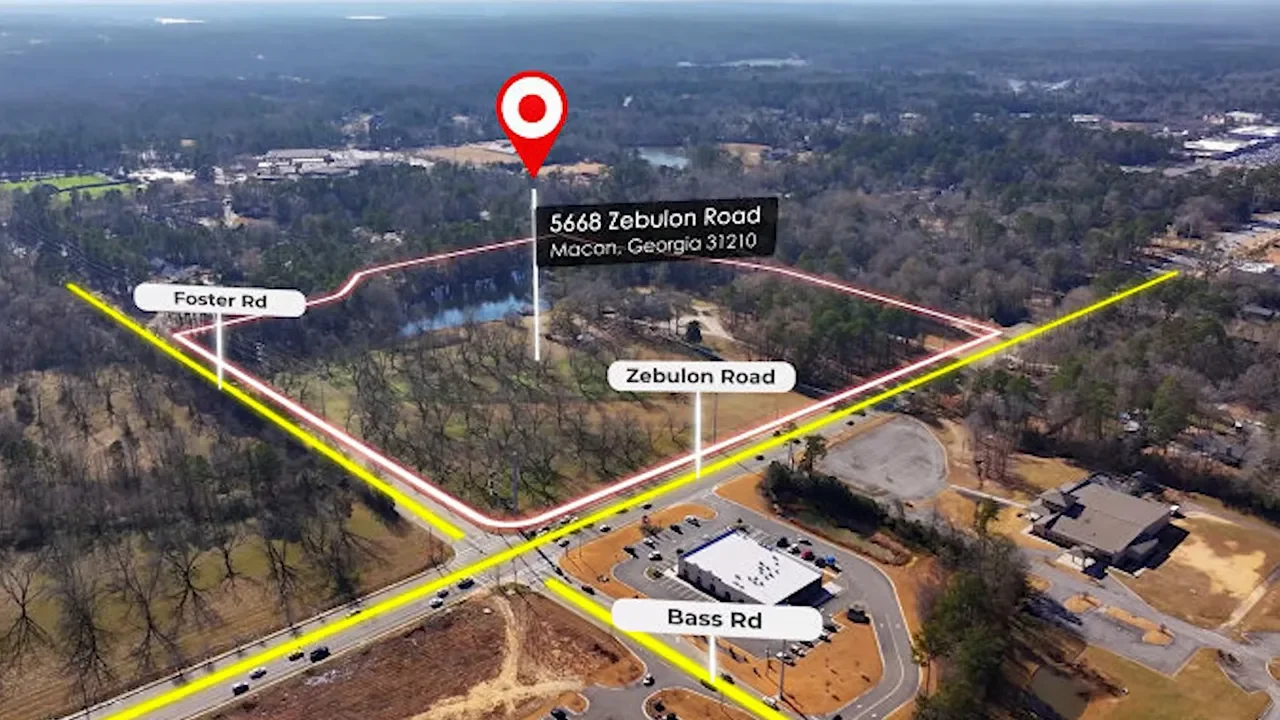
This is the difference between a thoughtful relocation and a frustrating one. Find the pocket first, then find the house.
5. You Really Need a Car
Macon does have public transportation through the MTA, but it is not the kind of system most people can rely on for a simple daily commute. There are 11 routes, with service running roughly every 45 to 80 minutes.

MTA can be useful, but daily life in Macon is much easier with a vehicle.
Think of the bus system as a lifeline, not a full transportation plan. Ride-share options are available, but fewer drivers can mean higher prices. If you are moving to Macon, plan to drive for groceries, work, restaurants, appointments, and most of what you do.
6. Downtown Macon Is Growing Fast
Downtown is not sitting still. More than $400 million in development has been discussed for the area, including major investment connected to Mercer University’s medical school and surrounding development. There is also momentum behind efforts to elevate the Ocmulgee Mounds area, including a push connected to national park status.

Large-scale development is one reason many people see this as a pivotal moment for downtown Macon.
The city is actively rebuilding, improving, and trying to attract more people. Local planning efforts tied to 2030 have put particular focus on young adults, young professionals, and singles who want more work opportunities and city energy without Atlanta-level costs.
For young professionals and people who can work private-school options into their plans, Macon can be a very interesting opportunity. Families should weigh the school-zone piece carefully, because that is where the decision gets more specific.
7. School Choice Starts With the Address
School ratings in Macon have historically been a major concern, and it is important to be straightforward about that. Older ratings were rough. However, the direction has improved significantly. The graduation rate discussed for Bibb County reached about 89%, beating the state average for three straight years. Houston County was cited at 91.2%.

Bibb County schools have shown real progress, but the assigned district should still shape the home search.
The practical point is this: your child’s assigned school depends on the home address. You cannot assume you can buy in one district and casually choose another public school. Private school and homeschooling are different paths, but for a standard public-school move, the address drives the assignment.
If schools are a top priority, make the school zone one of the first filters in your home search. Do not make it an afterthought after finding a house you love.
8. The Summers Are Hot and Humid
Yes, Georgia gets hot. July highs around 92 degrees are normal, and the area can see more than 80 days a year at that level. Humidity around 75% makes it feel extra toasty.
But the other seasons are a real win. Spring, fall, and much of winter are very comfortable. Snow is possible but rare, and it usually does not stick around long. A brief winter weather event can still disrupt things because snow equipment is limited and many local drivers are not used to icy roads, but getting snowed in is not the norm.
If you are coming from a dry-heat climate, the humidity will take some adjustment. Still, the year-round weather is one of the benefits for people who want a mild winter without living in a place that stays brutally hot all year.
9. Macon Is the Cherry Blossom Capital of the World
This one surprises people. Macon has roughly 350,000 Yoshino cherry trees, and every March the city turns pink for the Cherry Blossom Festival.

Cherry blossom season gives Macon one of its most memorable annual transformations.
It is not one of those festivals where you walk around, buy a disappointing slushy, and leave wondering why you came. There are vendors, food, parades, events, and a genuinely cool citywide atmosphere. It is one of the best things about living in Middle Georgia, and it is absolutely worth putting on the calendar.
10. The Music and Film Scene Runs Deep
Macon’s music history is the real deal. This is the city tied to the Allman Brothers Band, Otis Redding, and Little Richard. You can tour the Big House, visit the places connected to that history, and grab soul food at H&H Restaurant, where the Allman Brothers famously ate.

There is also an active live-music culture, a newer amphitheater, and venues across the area. On top of that, the local creative scene has room for small film projects, creators, and independent producers, including activity around Warner Robins.
If music, history, and a little creative energy matter to you, Macon has more depth than people give it credit for.
11. Macon’s Location Is a Major Advantage
Macon gives you central Georgia access without having to live in the Atlanta metro. Atlanta is about 90 minutes away. Savannah is an easy eastbound trip. Head north and you can reach the Blue Ridge Mountains, Ellijay, Blue Ridge, and Helen for a great weekend getaway.
Helen has that fun German-style downtown feel, complete with sausage and sauerkraut. Head south on I-75, and beach trips become much easier too. In roughly four to four and a half hours, you can reach some beautiful beaches without fighting Atlanta traffic.
That location is part of the value proposition. A manageable cost of living, solid job options around the region, and access to vacations that do not require an expensive flight can make a huge difference in everyday life.
12. Job Growth Is Picking Up
There is a lot happening on the job front. Macon-Bibb landed ArcelorMittal Building Solutions North American headquarters, along with another 500 jobs connected to Unified Legacy. The region also has major employment anchors including GEICO’s largest U.S. office, Atrium Health, Amazon, Mercer University, and the expanding medical-school presence.

New headquarters and major employers are adding to the job-growth conversation in Macon-Bibb.
These are not just random job postings. The bigger story is that the city has been working to turn itself around through investment, redevelopment, education, healthcare, logistics, and private-sector growth. A lot of locals are calling this “Macon’s moment,” and it is easy to see why.
Macon was once a thriving, beautiful city with incredible historic homes and a strong downtown. It went through a difficult stretch. Now, city leadership, local organizations, employers, and residents are putting real energy into bringing it back.
Is Macon, Georgia Right for You?
Macon is not for everyone, and that is okay. You need to be comfortable driving, prepared for humid summers, intentional about your school zone, and honest about neighborhood-by-neighborhood differences.
But if you want more home for your money, access to Middle Georgia employers, a central location for travel, authentic music history, and a city with real momentum, Macon may be one of the best-kept secrets in the Southeast.
Take your time. Compare the numbers. Research the pockets. Find the job plan. Then choose a home that works for your family, not just a home that looks good online.
Frequently Asked Questions About Moving to Macon, Georgia
Is Macon, Georgia affordable?
Yes, Macon is generally more affordable than Atlanta, particularly for homebuyers. Local figures discussed range from an average home price near $156,000 to a median near $195,000, depending on the measure used.
Do you need a car to live in Macon?
Yes. Macon has MTA bus service, but its limited routes and frequency make a vehicle the practical choice for most work commutes and daily errands.
How should families choose a home in Macon?
Start with the assigned school district, commute needs, and neighborhood research. In Macon-Bibb, the home address determines the public-school zone, so the school search should happen before the home search.
Get the Free Middle Georgia Relocation Guide
Plan your move with local details on homes, jobs, healthcare, amenities, and everyday life in Middle Georgia.