PCSing to Robins Air Force Base in 2026 brings a big financial decision right to the front of the move: rent or buy? Renting is easy. You find a place, use your BAH, move in, and move out when orders change. But easy does not always mean strategic.
If I were PCSing to Robins AFB, I would seriously look at buying a home instead of renting, specifically a new-construction home in a high-appreciation area with strong schools. The goal would not just be to have a place to live for the next few years. The goal would be to create an asset that can work for you after the next PCS.
I rented for about three years when I moved here, and I estimate that decision cost me roughly $70,000 in missed equity. That is why I am so direct about this: if the numbers, timeline, and household budget fit, buying can put military families in a very different position than spending years building a landlord's wealth.
Key Takeaways
Buying in Kathleen or Bonaire can provide stronger school-driven demand and rental appeal near Robins AFB.
Builder incentives may reduce upfront purchase costs through closing-cost assistance and home upgrades.
A VA loan strategy can build equity before a PCS and potentially create a future rental property.
Renting is simpler, but buying requires careful math around timeline, payments, resale costs, and rental demand.
Table of Contents
Why New Construction Can Be a Strong Military Buyer Opportunity
House Hacking at Robins AFB Does Not Have to Mean Buying a Duplex
The Bottom Line: Think Beyond This PCS
My Basic Strategy for a Robins AFB PCS
If I were arriving at Robins Air Force Base today, I would focus on two things:
Buy in a desirable neighborhood with strong schools and a history of appreciation.
Use a competitive new-construction builder offer when the incentives make sense.
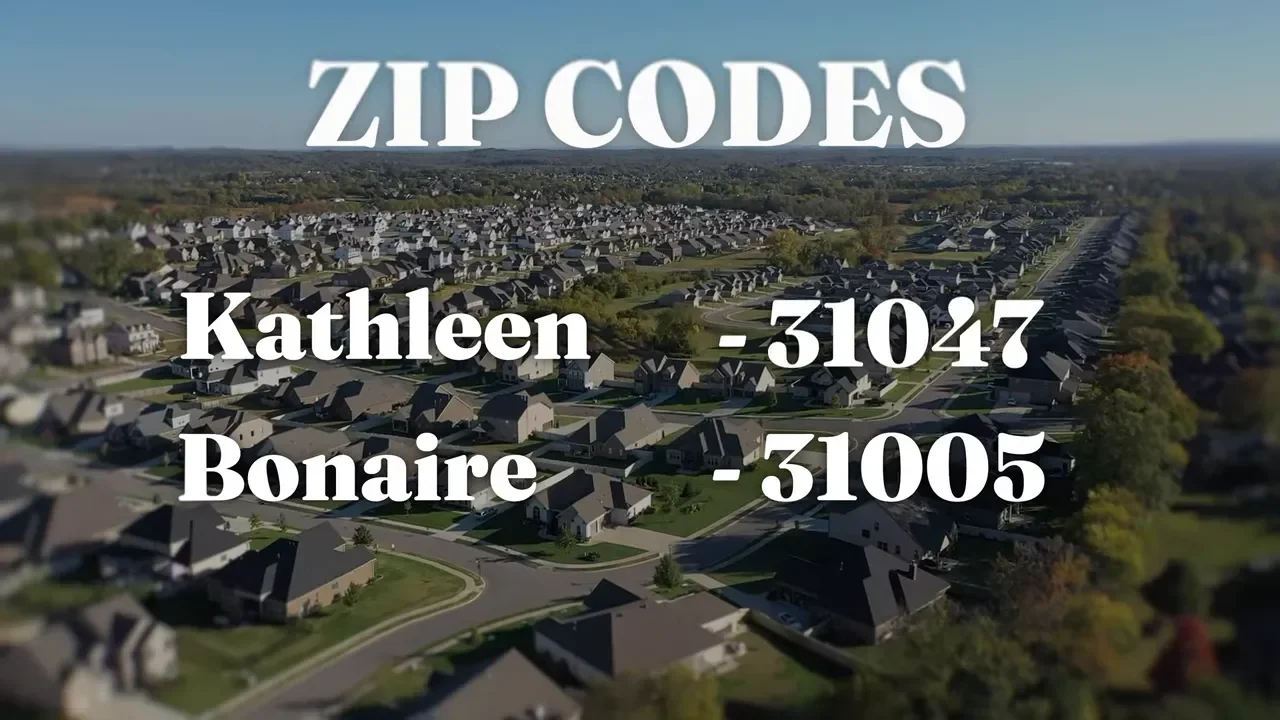
Kathleen and Bonaire are the two areas I would prioritize for school access and long-term demand.
For Robins AFB, my preferred ZIP codes are Kathleen 31047 and Bonaire 31005. These areas are known locally for their public school options, including Veterans High School, and they continue to attract families looking for strong school districts.
They also offer a manageable commute. Depending on the exact neighborhood and gate access, most homes in Kathleen and Bonaire are roughly 10 to 20 minutes from base. Perry can be a good option too, typically with a longer drive of around 25 minutes.
Why Kathleen and Bonaire Matter for Long-Term Value
When you may only be stationed somewhere for three or four years, it is tempting to pick the closest rental and call it a day. But the better question is: where will demand still be when you leave?
Kathleen and Bonaire stand out because families continue moving toward these school zones. A home in a desirable school district can be more attractive both to future buyers and to prospective tenants. That does not guarantee appreciation or cash flow, but it gives you a more durable foundation than simply choosing the lowest rent near base.
The plan is straightforward:
Buy a home in a strong location.
Live in it for three to four years while building equity.
When it is time to PCS, evaluate whether to sell, refinance, or keep it as a rental.
Use the equity and experience to upgrade into a future home or continue building a portfolio.
If you choose to keep the property, a solid school district can help support tenant demand. The idea is to own something that is positioned to remain useful after your orders change.
Why New Construction Can Be a Strong Military Buyer Opportunity
Not every builder is the same, and I am not talking about every local builder. But some national builders in the Warner Robins area are aggressively competing for buyers through closing-cost assistance and upgrade incentives.
I recently helped an Army National Guard buyer purchase in Perry, just south of Kathleen and Bonaire. That buyer received:
$12,500 in free upgrades
$15,000 toward closing costs
That is a meaningful difference when you are relocating, furnishing a home, and managing the normal chaos of a PCS. Depending on the builder, lender, loan program, and contract terms, an eligible VA buyer may be able to get into a new home with minimal upfront cash beyond items such as an earnest-money deposit and home inspection.
In the example above, the buyer's inspection was roughly $400. A deposit may be required upfront, but some builder contracts credit it back at closing. The exact numbers change from builder to builder, so read the contract carefully and get clear written estimates before committing.
The play is simple: use the VA loan strategically, build equity while living there, then decide whether the home works as a rental.
The VA Loan Wealth Play
The VA loan is one of the best lending tools available to eligible military members and veterans. It can offer zero-down financing, and VA loan rates are often competitive with conventional financing. For official details on eligibility, occupancy, and funding fees, review the VA home loan program.
Here is the strategy I want more military families to think about:
Buy with a VA loan if you are eligible and the payment works for your budget.
Negotiate builder incentives to reduce closing costs and improve the home with upgrades.
Occupy the home as your primary residence and build equity over time.
After your assignment changes, evaluate renting it out rather than automatically selling.
Use remaining VA entitlement or restore entitlement when appropriate for the next purchase.
That is how you can potentially leave an assignment with two homes instead of a stack of rental receipts. You have housing allowance coming in, and you may have access to a VA loan. Used responsibly, those are powerful tools.
But this is where people need to slow down and do the math. Rolling the VA funding fee into a loan can make sense in certain situations. If you plan to sell after only a couple of years, though, you need to account for the funding fee, interest paid early in the loan, closing costs, and possible resale costs. You may not break even simply because you bought a house.
Buying is not automatically the right move. The right move is the one that fits your expected timeline, payment comfort, emergency savings, future PCS risk, and realistic rental numbers.
House Hacking at Robins AFB Does Not Have to Mean Buying a Duplex
When people hear “house hacking,” they usually picture a duplex, triplex, or quadplex. Those opportunities are limited in the Robins AFB area, and the available properties can require serious renovation or ground-up construction.
So for this market, I would look at a simpler version of house hacking: buy a quality single-family home in a location where people want to live, then convert it into a rental when you move.
A good tenant, a property in a desirable school system, and a payment that leaves room for maintenance can make this approach viable. If rental income covers the costs and leaves positive cash flow, the tenant is helping pay down the loan while the property has the opportunity to appreciate.
Over a military career, repeating that process every few years could create a meaningful portfolio. You can hold those homes for the long run or sell later and redirect the proceeds toward savings, a future purchase, or a forever home.
Why Robins AFB Supports Local Housing Demand
The bigger reason this strategy deserves attention is the economic engine behind Robins Air Force Base. The base contributes approximately $4.48 billion to the local economy and supports more than 21,000 employees. The workforce has reportedly increased by 11% over the past two years, with projected growth of roughly 3% to 5% per year.
There are also substantial civilian employment opportunities connected to the base. Job seekers can explore openings through USAJOBS and may want to look into Direct Hire pathways for certain positions.
One key housing fact is that roughly 90% of military personnel at Robins AFB live off base. The base is growing, but on-base housing availability is limited. That means the surrounding communities carry much of the demand for homes and rentals.
As employment and population grow, rents have been rising as well. That does not mean every home will make a great rental. It does mean that a carefully selected property in a high-demand location deserves a closer look.
The Cost of Renting With BAH
Renting can absolutely be the right choice for a short assignment, uncertain future plans, or a household that does not want the responsibility of ownership. There is no shame in renting. But do not ignore the long-term tradeoff.
Using the example of an E-5 with dependents receiving around $1,875 per month in BAH, three years of rent can add up to a little over $40,000. That money buys housing for the assignment, but it does not build equity.
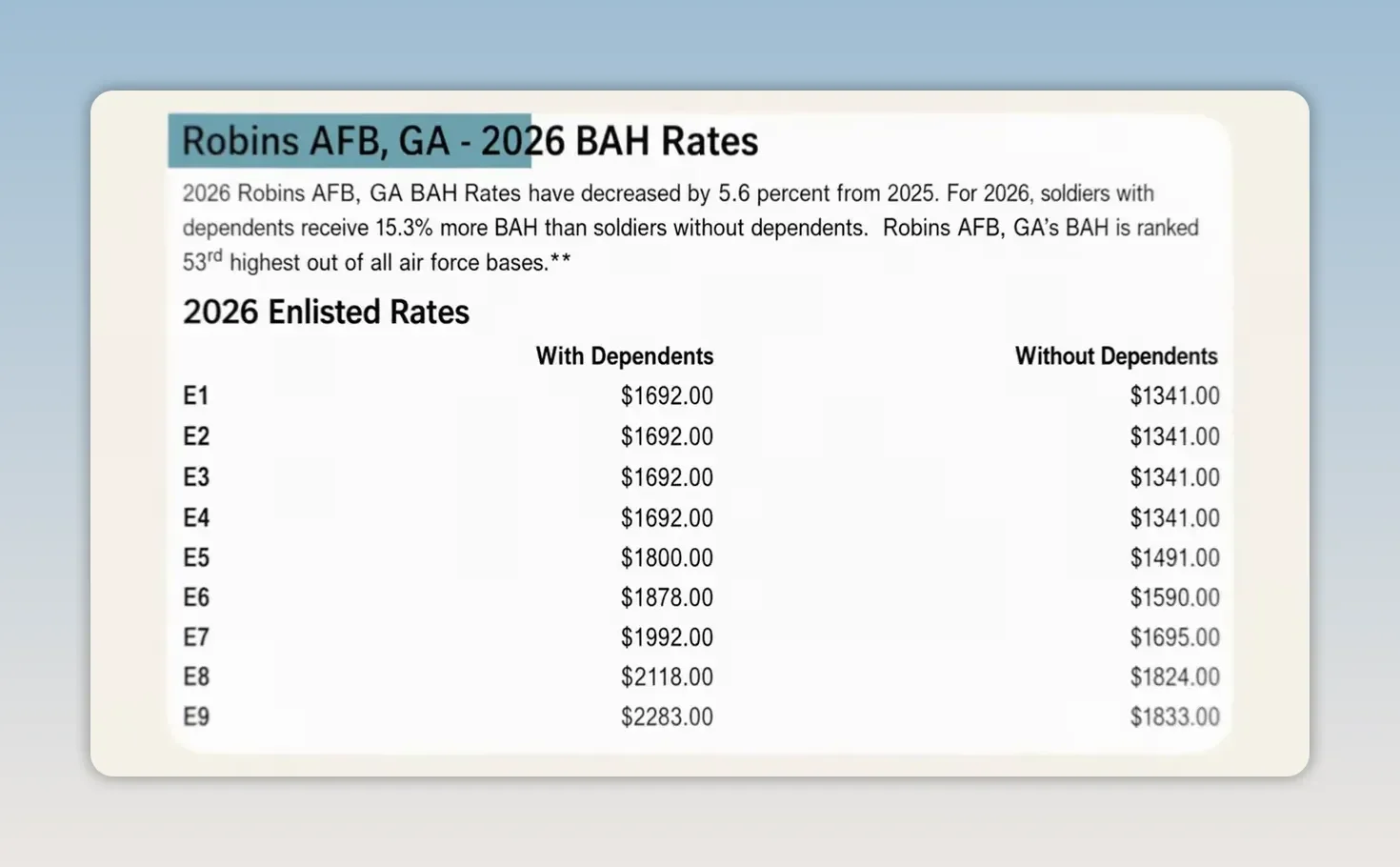
Your rank and dependency status determine BAH, so use your exact entitlement when comparing rent and ownership costs.
That does not mean all $40,000 is “lost.” Rent provides a needed home without repair risk, resale risk, or landlord responsibilities. But if you are eligible for a VA loan, expect to stay long enough, and can purchase a property with an exit strategy, ownership may give your BAH a chance to do more.
Before you decide, compare your actual BAH, mortgage payment, taxes, insurance, HOA dues, utilities, maintenance reserve, expected rent, and potential vacancy. You can also use the Warner Robins cost of living guide to put the broader monthly budget into perspective.
When Renting May Still Be the Better Move
I am pro-buying when the setup is right, but I am not pro-buying at any cost. Renting may make more sense when:
You expect to leave in less than two years.
You do not have a cash reserve for repairs, moving costs, and unexpected expenses.
The monthly ownership payment would stretch your budget.
You are unsure whether the property would rent for enough to cover its costs after a PCS.
You do not want the responsibilities of being a long-distance landlord.
Buying a home is not a shortcut. It is a strategy. A good strategy needs a location with demand, a payment that works, enough time to build equity, and a realistic plan for the next assignment.
The Bottom Line: Think Beyond This PCS
Renting near Robins AFB can be simple, but simple is not always the best financial outcome. If you buy in a strong school district, select a home with rental appeal, use VA financing wisely, and negotiate smart new-construction incentives, you could leave Middle Georgia with an asset instead of just rental history.
My preferred version of the plan is simple: buy in a top school district, build equity, then let renters help pay it off after the next PCS. That is the opportunity military families should at least put on the table before automatically signing another lease.
Get the Free Robins AFB PCS Guide
Use the complete relocation checklist for schools, restaurants, moving logistics, and settling into Middle Georgia.
Robins AFB Rent vs. Buy FAQ
Should military families buy a home when PCSing to Robins AFB?
Buying can make sense for families who expect to stay long enough to build equity, can afford the full ownership costs, and choose a property with strong resale or rental demand. It is not automatically the right choice for every PCS.
What are the best areas to buy near Robins Air Force Base?
Kathleen in ZIP code 31047 and Bonaire in ZIP code 31005 are strong areas to consider because of their school districts, local demand, and manageable commute to Robins AFB.
Can I use a VA loan to buy a new-construction home near Robins AFB?
Eligible buyers can use VA financing for qualifying new-construction homes. Some builders may offer closing-cost contributions and upgrades, but availability, lender requirements, and terms vary by builder and community.
Can I rent out my Robins AFB home after I PCS?
Many owners evaluate renting out their home after a PCS, especially when the property is in a desirable school district. Before doing so, confirm your loan requirements, estimate rent conservatively, budget for maintenance and vacancies, and consider property management.